Sugar crystals

About Sugar

Types of sugar

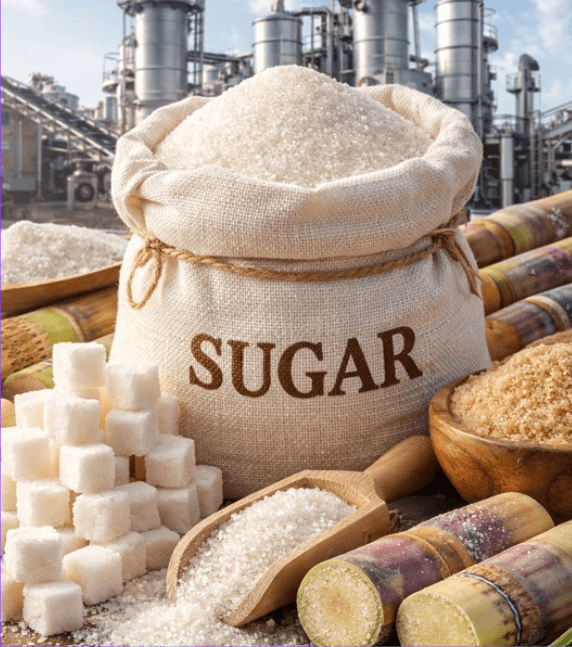
3 core types of Sugar

Brazilian mills commonly produce several commercial sugar grades. Each grade serves different buyers depending on color, purity, processing level, and logistics requirements.

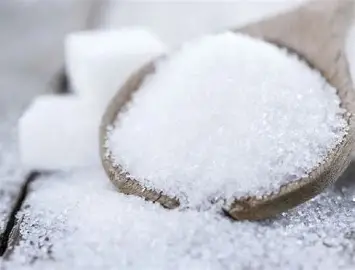
  • Brilliant white refined sugar crystals

    ICUMSA 45

    Description

    This is the highest quality refined white sugar available on the global market. It undergoes an extensive refining process to remove all non-sucrose substances, resulting in brilliant white crystals and exceptional purity over 99.8%.

    Primary Uses

    • · Beverage manufacturing: soft drinks, juices, and syrups. Its superfine grade dissolves instantly in both hot and cold liquids.
    • · Food production: confectionery, dairy products, desserts, and tabletop sweeteners.
    • · Pharmaceutical applications: used as an excipient in medicines and syrups where high purity is mandatory.
    • · Retail and baking: premium-grade sugar for home use and professional bakeries.

    Global Trading

    ICUMSA 45: The Benchmark for White Sugar

    Why it is the most traded refined sugar: Premium Quality and Standardization.

    • The StandardICUMSA 45 is the gold standard for direct consumption. It is the grade that commodity exchanges, such as the London ICE contract for white sugar, use as the benchmark.
    • No further processing neededUnlike VHP, which must go through a refinery, ICUMSA 45 is ready to use immediately upon arrival.
    • High-demand industriesIt is mandatory for pharmaceuticals, premium beverages such as Coca-Cola and Pepsi, and high-end food products where color and purity cannot be compromised.
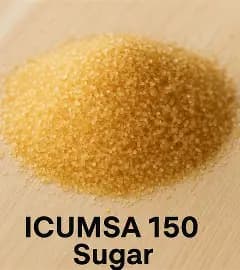
  • Off-white refined sugar crystals

    ICUMSA 150

    Description

    This is a white crystal sugar that is lightly refined, retaining a slightly softer natural color sometimes described as off-white or light golden. It balances quality and affordability, making it a popular alternative to fully refined sugar.

    Primary Uses

    • · Industrial food processing: large-scale bakeries, biscuit manufacturing, and confectionery where maximum whiteness is not critical.
    • · Beverage manufacturing: suitable for many drink applications.
    • · Cost-effective alternative: preferred by manufacturers seeking food-grade, high-polarization sugar below ICUMSA 45 pricing.

    Global Trading

    Where does ICUMSA 150 fit?

    ICUMSA 150 is significantly less traded than VHP or ICUMSA 45. Here is why:

    • The "Tweener" problemIt is too expensive to compete with VHP, which can be refined into better quality sugar, yet it is not pure or white enough to compete with ICUMSA 45 for premium uses.
    • Niche marketICUMSA 150 is typically traded in specific regional markets, including parts of Africa or the Middle East, where buyers want white-looking sugar for industrial baking or lower-grade soft drinks but cannot afford ICUMSA 45.
    • Not a benchmarkICUMSA 150 is rarely traded on major futures exchanges and is usually a physical spot market product.
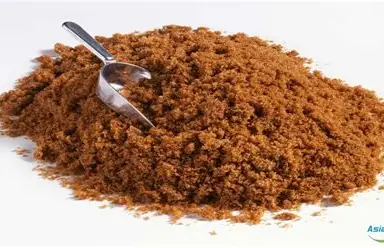
  • Raw brown sugar production at a mill

    VHP

    Description

    VHP is a raw sugar, meaning it undergoes minimal processing. It is typically brown in color and has a higher impurity content (ash, moisture) than refined white sugars. Despite being raw, it is called "Very High Polarity" because of its high sucrose content, which makes it ideal for industrial refining. It is the most common type of sugar exported from major producers like Brazil.

    Primary Uses

    • · Raw material for refining: dissolved, purified, and recrystallized by local refineries to produce white sugar such as ICUMSA 45.
    • · Industrial fermentation and biotech: studied and used as a low-cost carbon source for prebiotics and other biochemicals.
    • · Large-scale industrial applications: usable directly where color and high purity are not required.

    Global Trading

    VHP Sugar: The King of Raw Sugar Trade

    Why it is the most traded: Efficiency and Refining Economics.

    • The Business ModelMajor producers such as Brazil, India, and Thailand export VHP directly to importing countries such as China, Indonesia, the UAE, and Morocco that have their own local refineries.
    • Why not fully refine it?It is cheaper to ship raw sugar in bulk and refine it close to the consumer market.
      • Lower freight costVHP is heavier and denser than white sugar, allowing more tons per shipping container or vessel.
      • Avoids cakingRaw sugar does not cake as easily as white sugar during long sea voyages.
      • Local protectionMany countries impose lower import tariffs on raw sugar than on white sugar to protect their domestic refining industries.

ICUMSA: International Commission for Uniform Methods of Sugar Analysis*

Meaning of ICUMSA Numbers: The ICUMSA value measures the "color" of sugar (how many impurities remain). Lower number = fewer impurities = higher quality.*

Why sugar matters in real-world assets

Sugar is considered a strategic commodity because it sits at the crossroads of national security, economic stability, and public health. Unlike ordinary goods, a disruption in its supply chain can trigger inflation, civil unrest, and even threaten a nation's ability to feed its population.

Physical commodity with recurring demand

Brazil-centered production advantage

Clear link between inventory and RWA value

Sugar is not just a luxury; it is a fundamental source of calories and a critical preservative. The COVID-19 pandemic and the war in Ukraine exposed the fragility of "just-in-time" supply chains, prompting nations to treat sugar like a strategic reserve.

Strategic stockpiles: Major nations maintain physical reserves of sugar. China has held large strategic grain and sugar stocks for years, while Russia recently created a 250,000-tonne security stock of sugar stored across 16 locations to respond quickly to supply chain disruptions.

Domestic protection: The US government explicitly links sugar policy to national security. Policymakers argue that food security is national security, and the USDA actively manages sugar imports to prevent foreign flooding that would destroy domestic farming capacity.

Sugar prices have an outsized impact on everyday life. Because sugar is an ingredient in thousands of products, from bread to soft drinks, price spikes immediately drive up food inflation and can trigger social unrest.

The "white gold" effect: Historically, sugar has been as valuable as oil. Recent analysis comparing sugar to white gold shows how geopolitical shocks, like conflict in the Middle East, can send sugar prices soaring by 14% in a month.

Revenue and taxation: In countries like Ghana and Kenya, illegal sugar smuggling is described as economic sabotage. Illicit trade deprives governments of millions in tax revenue, undercuts legitimate businesses, and destabilizes local economies.

The global sugar market is not a free market; it is a battleground of state intervention. A few key nations control the vast majority of supply, giving them significant leverage.

The big players: Brazil, India, and Thailand dominate global trade. These governments heavily subsidize their producers, distorting world prices.

Vulnerable importers: Nations that do not produce enough sugar, including the US and the EU, are exposed to exporter policies, weather, and currency fluctuations.

Sugar is unique because it can be turned into energy. Brazil, the world's largest producer, uses sugarcane to produce ethanol for transportation.

The sugar-ethanol arbitrage: Brazil's fleet of flex-fuel cars creates a direct pipeline between the sugar market and the oil market. When oil prices rise above about $70 per barrel, it becomes more profitable for Brazilian mills to turn cane into fuel rather than food, shrinking global sugar supply and pushing world prices higher.

While countries hoard sugar, they also regulate it. Sugar's strategic nature is also defensive because governments must spend billions to mitigate its negative impacts.

Public health crisis: The global epidemic of obesity and diabetes has led governments to impose sugar taxes, such as in the UK, and strict labeling laws that directly reshape food policy.

Supply chain risks: The push for cheap sugar has contributed to environmental damage, including deforestation in Brazil's Cerrado region and water scarcity, as well as forced labor risks in sugarcane fields. These hidden costs force governments to regulate trade to prevent human rights abuses.

How Governments Protect Sugar Strategy

Developed nations do not leave sugar to market forces alone. They employ specific tools to protect their supply.

The US and EU use complex systems to limit cheap foreign imports, ensuring domestic farmers can survive.

The US government provides no-cost loans to sugar cooperatives (via the Commodity Credit Corporation) so farmers get paid immediately, stabilizing supply at "zero cost to taxpayers".

Nations regularly investigate and penalize countries accused of "dumping" subsidized sugar below the cost of production.